
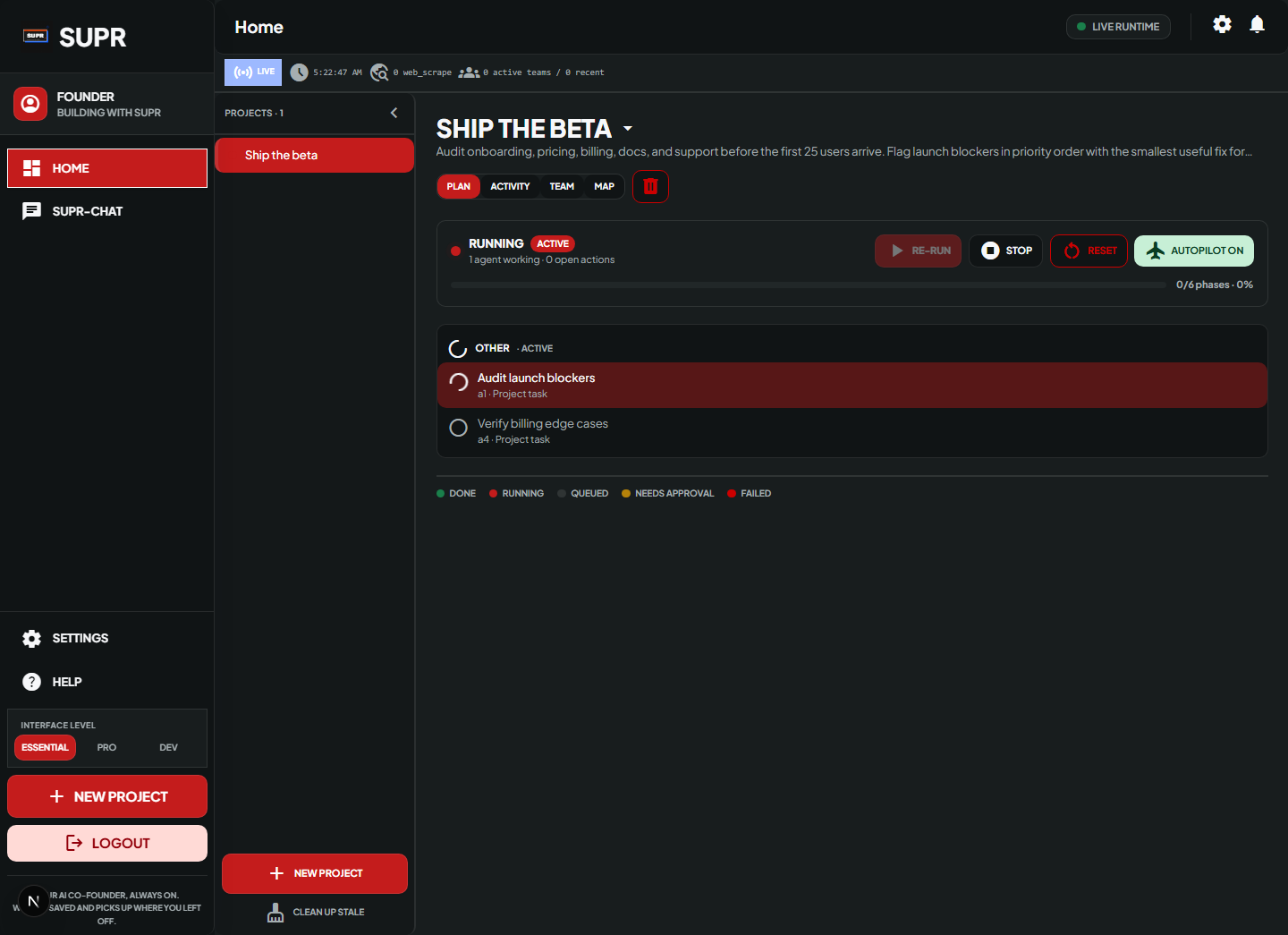
The Supr agent workspace running a launch audit: project plan, live run state, agent tasks, and autopilot controls.
First useful runGive Supr the project context, choose the job, and this workspace opens with your project loaded and the first agent already working.

Use Supr for

Launch audits

Give Supr: Your app URL, repo notes, pricing plan, onboarding flow, and the launch goal.

What you get: A ranked blocker list across billing, auth, docs, support, copy, usage visibility, and first-user friction.

Why it helps: Founders usually discover these gaps after the first users arrive. Supr helps catch them while there is still time to fix the path.

Use Supr for

Repo reviews

Give Supr: A product goal, the codebase context, and the question you need answered before shipping.

What you get: A practical read on what is wired, what is assumed, what can break, and which tests or guards are missing.

Why it helps: Useful when you need a second technical brain but do not want a vague code review.

Use Supr for

Bug investigations

Give Supr: Logs, reproduction steps, failing routes, screenshots, or the exact behavior that feels wrong.

What you get: Likely root causes, files to inspect, a repair plan, and the smallest verification loop.

Why it helps: You stay focused on the boundary that failed instead of wandering through the whole project.

Use Supr for

Feature planning

Give Supr: A rough feature idea, constraints, target user, and what must be true for the first version.

What you get: A scoped plan with files, dependencies, acceptance criteria, rollout risk, and approval checkpoints.

Why it helps: Turns founder fog into buildable work without pretending the first plan is already code.

Use Supr for

Research briefs

Give Supr: The decision you need to make, the sources or products to compare, and your constraints.

What you get: A clean brief with tradeoffs, recommendation, implementation notes, and open questions.

Why it helps: Keeps research from becoming a tab swamp and gives you something you can actually decide from.

Use Supr for

Release cleanup

Give Supr: A release target, current status, known loose ends, docs, tests, and product surfaces.

What you get: A final-mile checklist for copy, docs, admin surfaces, billing, support, and production sanity checks.

Why it helps: The last 10 percent is where tiny misses stack up. Supr turns them into a visible queue.

Use Supr for

Customer discovery

Give Supr: Your offer, the audience you think you serve, and the questions you need answered before building more.

What you get: A source-backed evidence table, customer language, interview questions, and the next assumption worth testing.

Why it helps: It replaces vague market research with a decision you can make this week.

Use Supr for

Positioning and offers

Give Supr: What you sell, who it is for, what customers say today, and any claims you need to avoid.

What you get: A positioning brief, message guide, proof needs, objections, and a review-ready offer draft.

Why it helps: It helps founders explain the value clearly before they spend a month creating more content.

Use Supr for

Sales and content drafts

Give Supr: Your buyer, product context, and the goal of the campaign or outreach effort.

What you get: Draft messaging, a content calendar, outreach research, and clear approval points before anything is sent.

Why it helps: You get useful material to review without handing an agent the keys to your external accounts.

Use Supr for

Pricing and packaging

Give Supr: Current packages, customer value, competitor notes, and the decision you are stuck on.

What you get: Pricing research, package options, tradeoffs, and a customer-facing draft that makes assumptions obvious.

Why it helps: It makes pricing decisions easier to review instead of making them feel like a guess.

Use Supr for

Weekly founder review

Give Supr: What happened, what is blocked, the numbers you have, and the decisions you are avoiding.

What you get: A short operating review, a ranked plan for the next week, and a decision log.

Why it helps: It turns a pile of tabs and notes into an honest plan for Monday morning.

A solo developer repo review workspace with code review panels, risk cards, architecture notes, and launch readiness context.
One workbench, many jobsSupr is strongest when the work has context, risk, a reviewable output, and enough value that saving an afternoon matters.

First run idea

Start with the task you would normally put off until tonight.

A launch audit, repo review, or bug investigation is enough to prove whether Supr belongs in your build workflow.

Fit check

Use Supr when the work deserves a trail.

Supr is strongest when the agent is helping with project-shaped work that you can review, approve, reuse, or tie back to a real decision.

A strong fit

The task has project context, a reviewable output, a clear owner, and enough value that saving an afternoon matters.

Start smaller

The task is fuzzy, risky, destructive, or externally visible. Ask Supr for a plan first, then approve the next step.

Not the right job

The task requires a licensed professional decision, unauthorized access, sensitive regulated data, or blind automation.

Prompt starters

Good first runs are specific, bounded, and useful today.

Audit my onboarding and pricing before I invite 25 beta users.

Review this repo and tell me what is not production-ready yet.

Turn this feature idea into the smallest useful implementation plan.

Investigate why this agent run failed after checkout completed.

Compare these deployment options and recommend the fastest safe path.